How much should an AI decide for you before it stops feeling like your trip?
Team project. The only brief: design an AI-based app. The idea, the audience and the experience were ours.
Roamly
An AI trip planner that builds your days around what you're into, and lets you argue with the plan.
Role
- AI interaction design
- Mobile UX
- Prototyping
Tools
Claude Code
Disciplines
- AI Product Design
- UX/UI
Year
2025
Overview
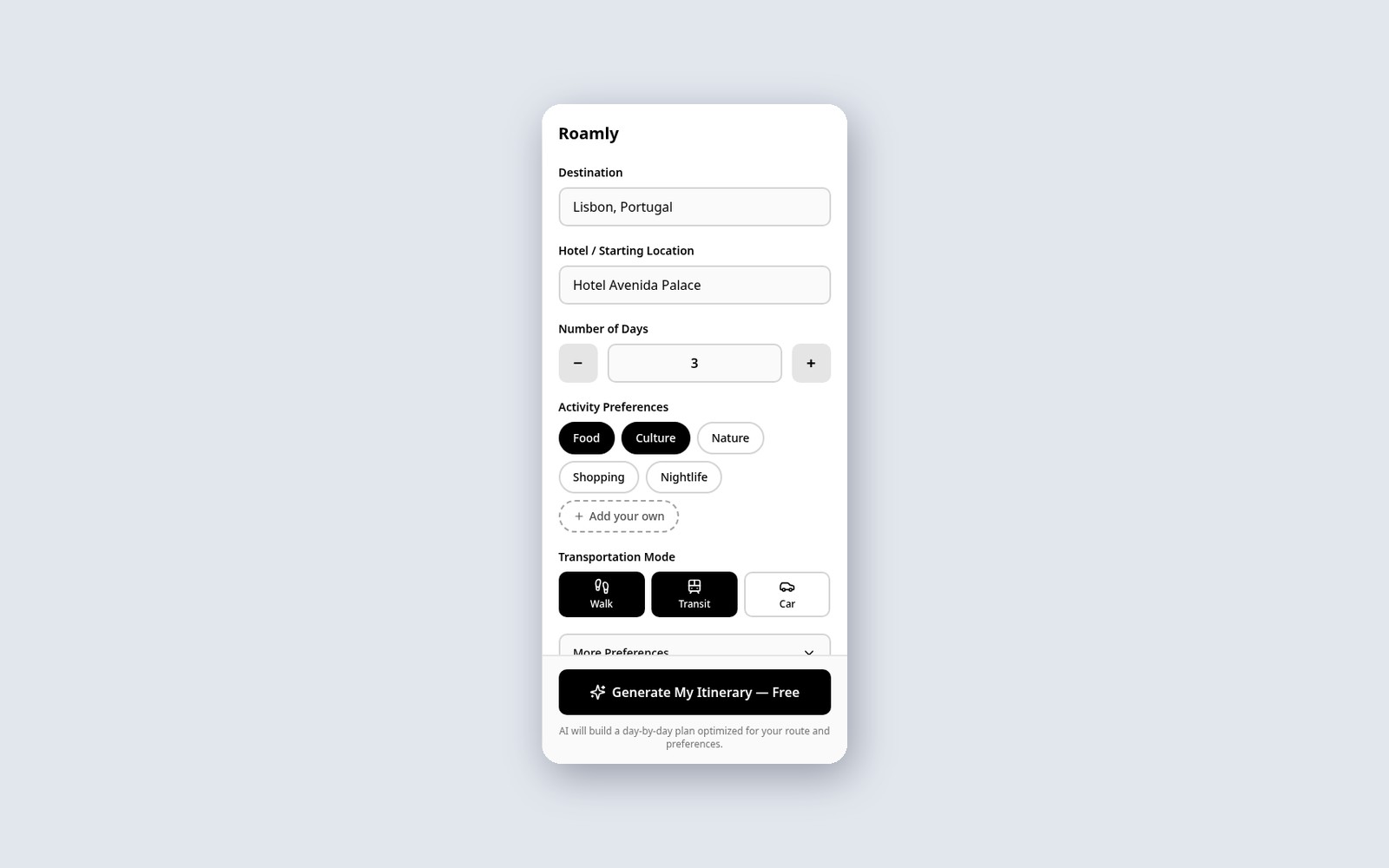
Tell Roamly where you're going, for how long, what you're into and how you get around, and it builds a day-by-day plan. Most AI planners either hand you the same five landmarks or turn a holiday into a long form. We wanted the fewest questions that still give you a plan you'd actually follow.
Design decisions
Ten seconds to start
Destination, days, a few interests and how you get around. Everything else sits behind "More preferences".
Explain the plan
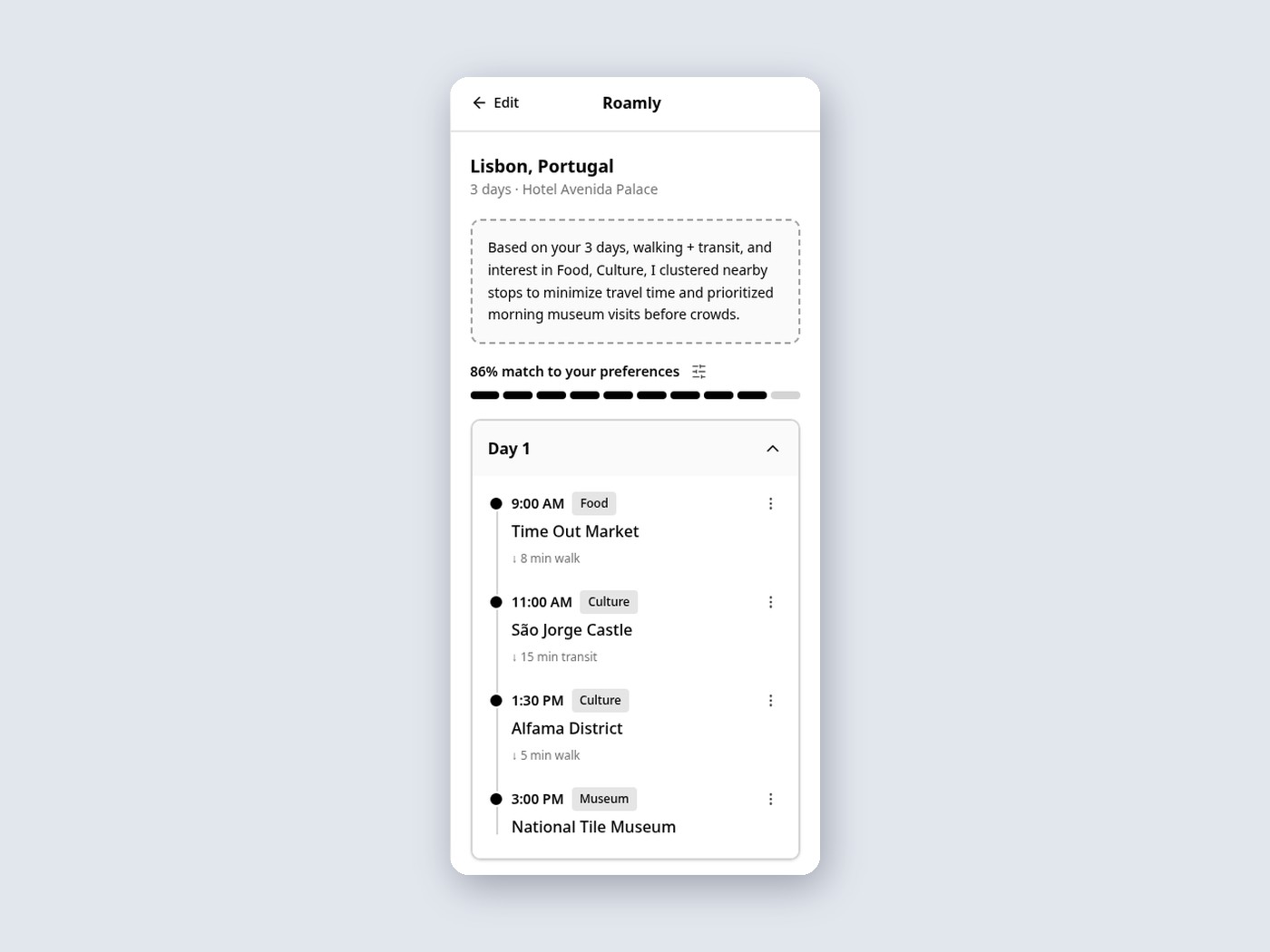
Before the itinerary, one short paragraph says why it looks this way: stops grouped by area, museums before the crowds.
A draft, not an answer
A match score and controls on every stop make it clear you're meant to swap and edit.
What I learned
With AI in the middle, half the design work is setting expectations: it guessed, and you can push back. When an interface acts too certain, people either trust it too much or stop trusting it at all.
Next project