Why is asking a roommate to do something harder than doing it yourself?
Advanced Product Design · Team project
Nook
A shared household app for managing chores, tasks, and responsibilities.
Role
- UX/UI design
- Information architecture
- Interface design
Tools
Claude Code
Disciplines
- Product Design
Year
2026
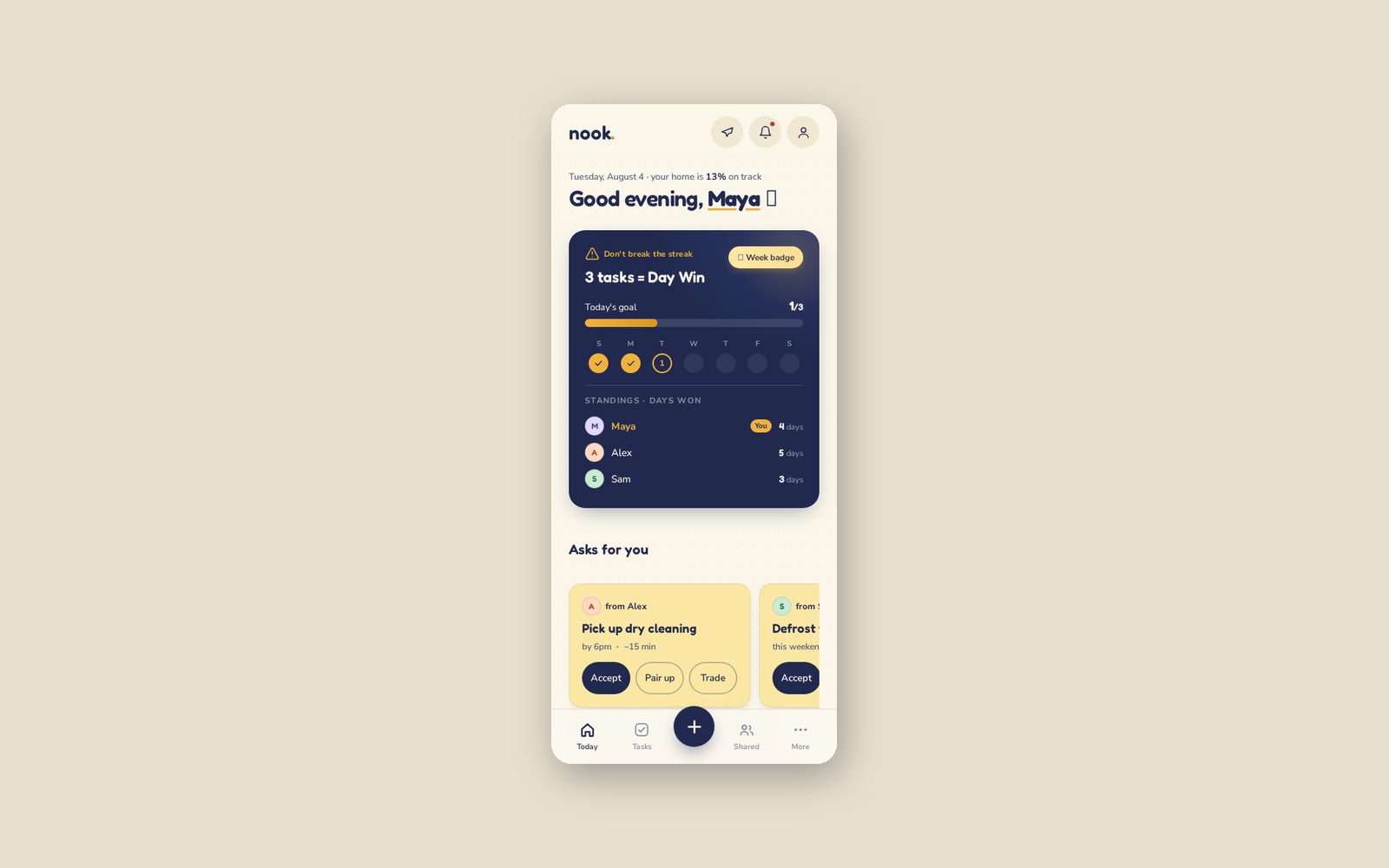
Overview
Nook is a home app for the invisible work of living together. It keeps shared responsibilities visible, so they don't depend on reminders, lost group chats or awkward conversations.
What we discovered
We expected memory to be the problem. It wasn't. Talking to people who live with roommates, we found the real issue was coordination: nobody was sure who owned what, asking felt awkward, and the same person kept picking up the slack. So we shifted the design from reminders to requests that roommates can accept, swap or take on together.
Design principles
Asks, not assignments
Roommates ask, accept, swap or pair up instead of assigning chores, so requests feel shared, not imposed.
Shared progress, not scoreboards
The household's progress comes before anyone's personal stats. No "best roommate" leaderboard.
Visibility over memory
People didn't forget. They just had no shared view of what needed doing. Nook gives them one.
Bringing the concept to life
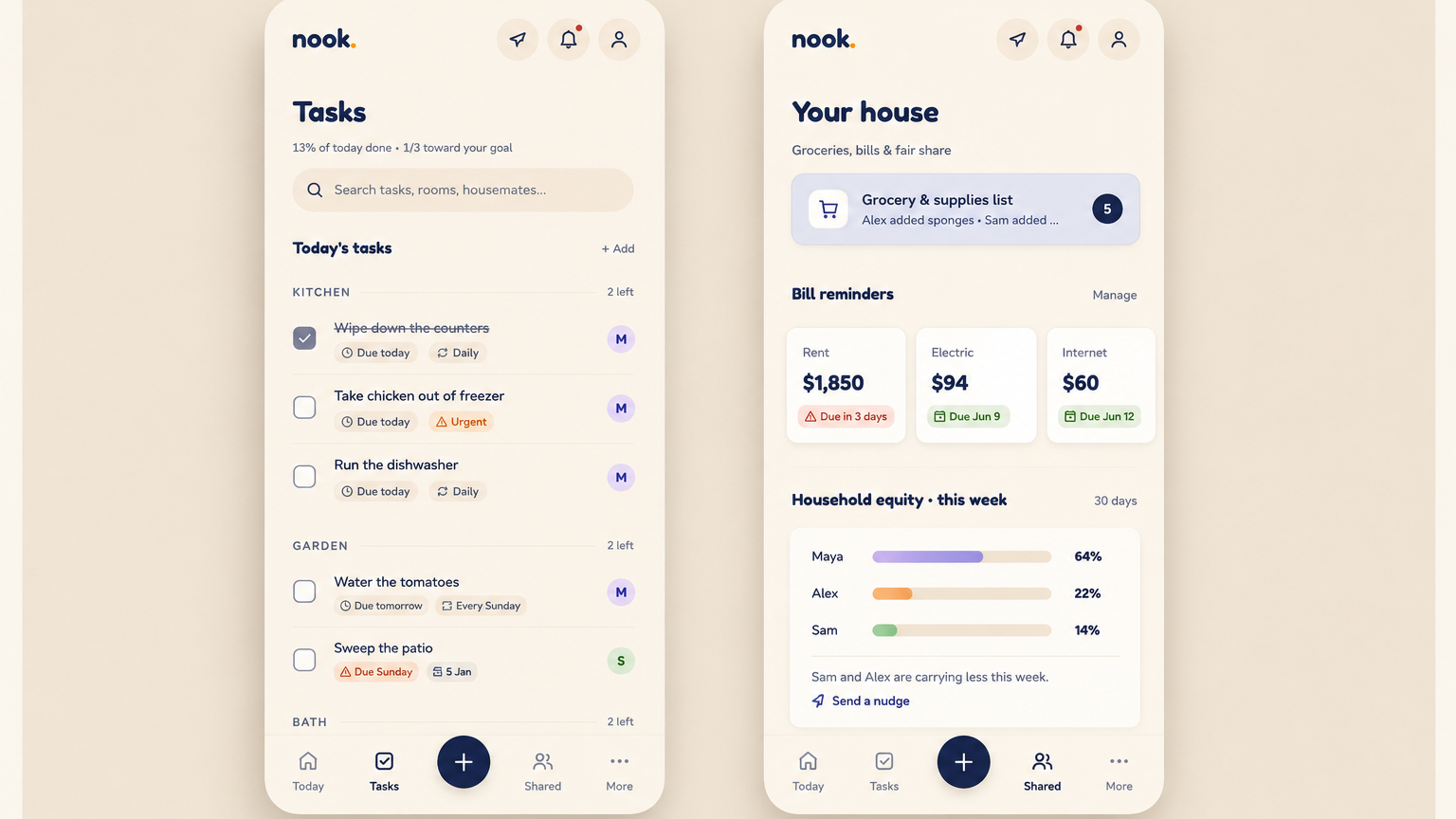
Two views: your tasks and your home. Personal and shared tasks stay separate, so everyone sees the same picture and nobody becomes the household manager.
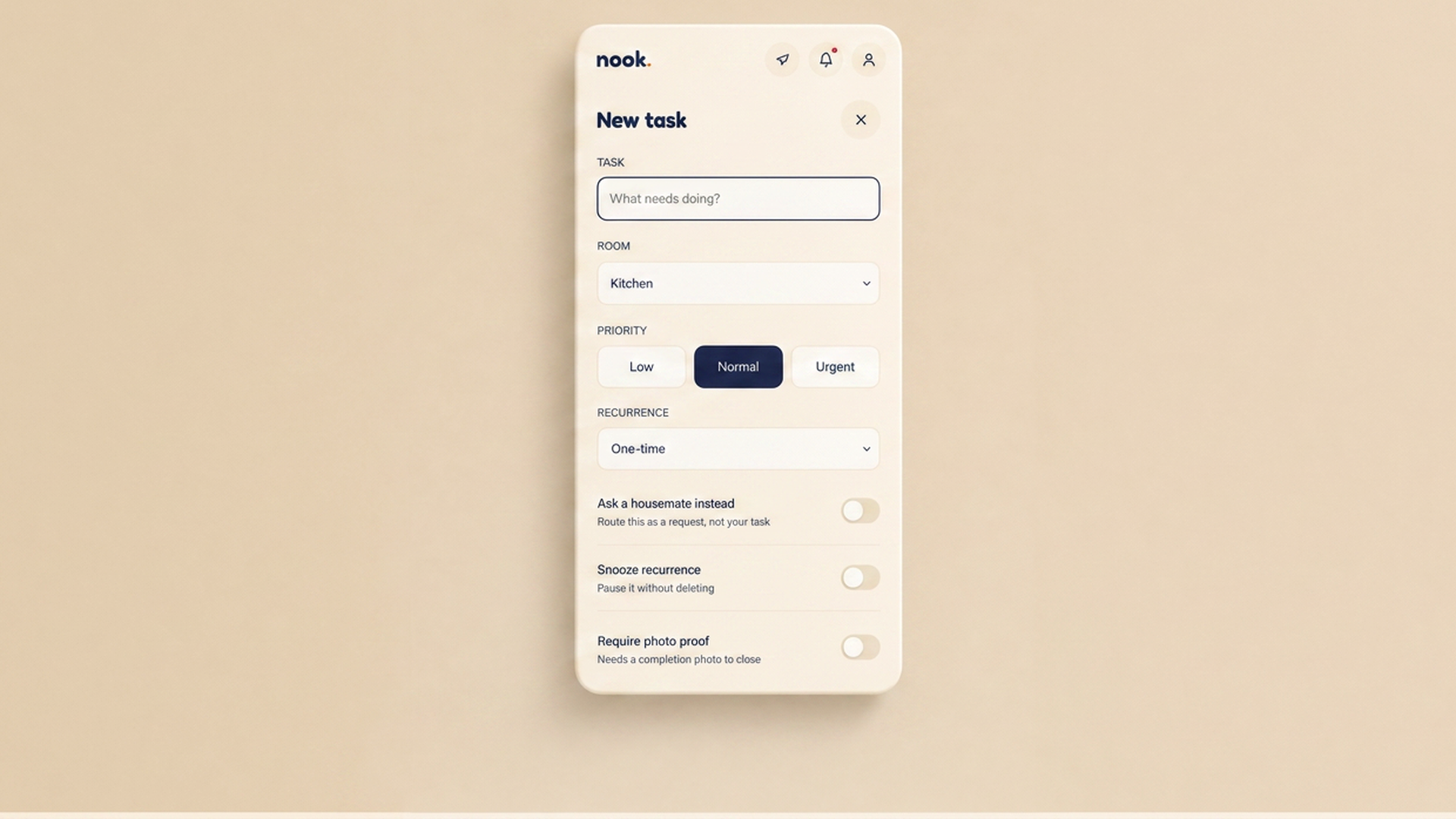
Creating a task starts with a choice. Keep it personal, or turn it into a request for a housemate.
Reflection
Designing for roommates taught me that every button changes how people treat each other. Good UX here wasn't about making chores faster. It was about less friction between people.
Next project